

Opportunities of digital platforms for sustainability
The first demonstrator uses ChainTraced’s platform, which focuses on traceability and carbon footprint visualisation throughout the value chain. With this solution, all companies in the value chain can visualize their carbon emissions, including Scope 1, 2, and 3 (See Figure 1). The platform’s “Traceback view” displays a tree structure where information about all components and their total climate impact can be traced (see Figure 2).
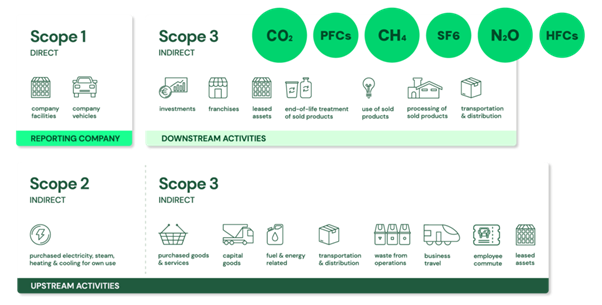
Figure 1 Scope 1, 2, and 3 emissions (Source: PlanA)
One of the central values of this solution is that the final product can be labeled with a stamp showing its environmental footprint throughout the manufacturing process. This helps companies identify where the most significant climate impact occurs in the value chain and promotes collaborations to reduce these emissions.
Challenges and future steps
The first version of the green coversion demonstrator used historical data and estimates to test the communication between companies in the value chain. CO2 data has been sent at the product level and is updated twice a year. The next step could involve collecting more realistic data at the batch level and for more material types.
A significant challenge is ensuring smooth integration between companies’ internal systems and the demonstrator. Additionally, physical and digital traceability must be synchronized throughout the value chain, which requires increased automation and coordination between different systems, including operational systems (OT) and business systems (IT).
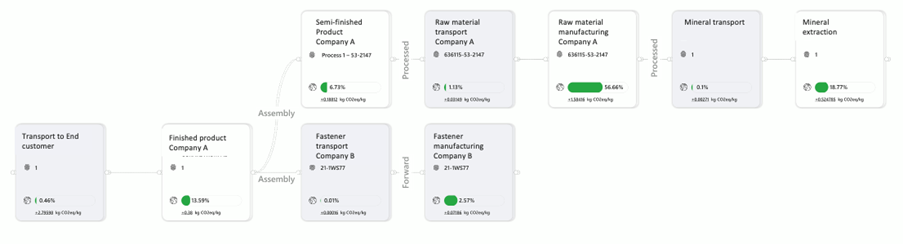
Figure 2 The ‘traceback view’ traceability tree generated from data collected from various actors in the value chain. The green bars represent the contribution to the total carbon footprint (Source: ChainTraced)
One of the main values of this solution is that the final product can be labeled with a stamp that shows its environmental footprint throughout the manufacturing process. This helps companies identify where in the value chain the greatest climate impact occurs and promotes collaboration to reduce these emissions.
The members of our work package have tried to leverage data along the value chain and create clear visualizations where carbon footprints and products’ status can be viewed effectively. This work has never been more relevant with new directives for sustainability reporting (CSRD) and increased customer demands for green steel.